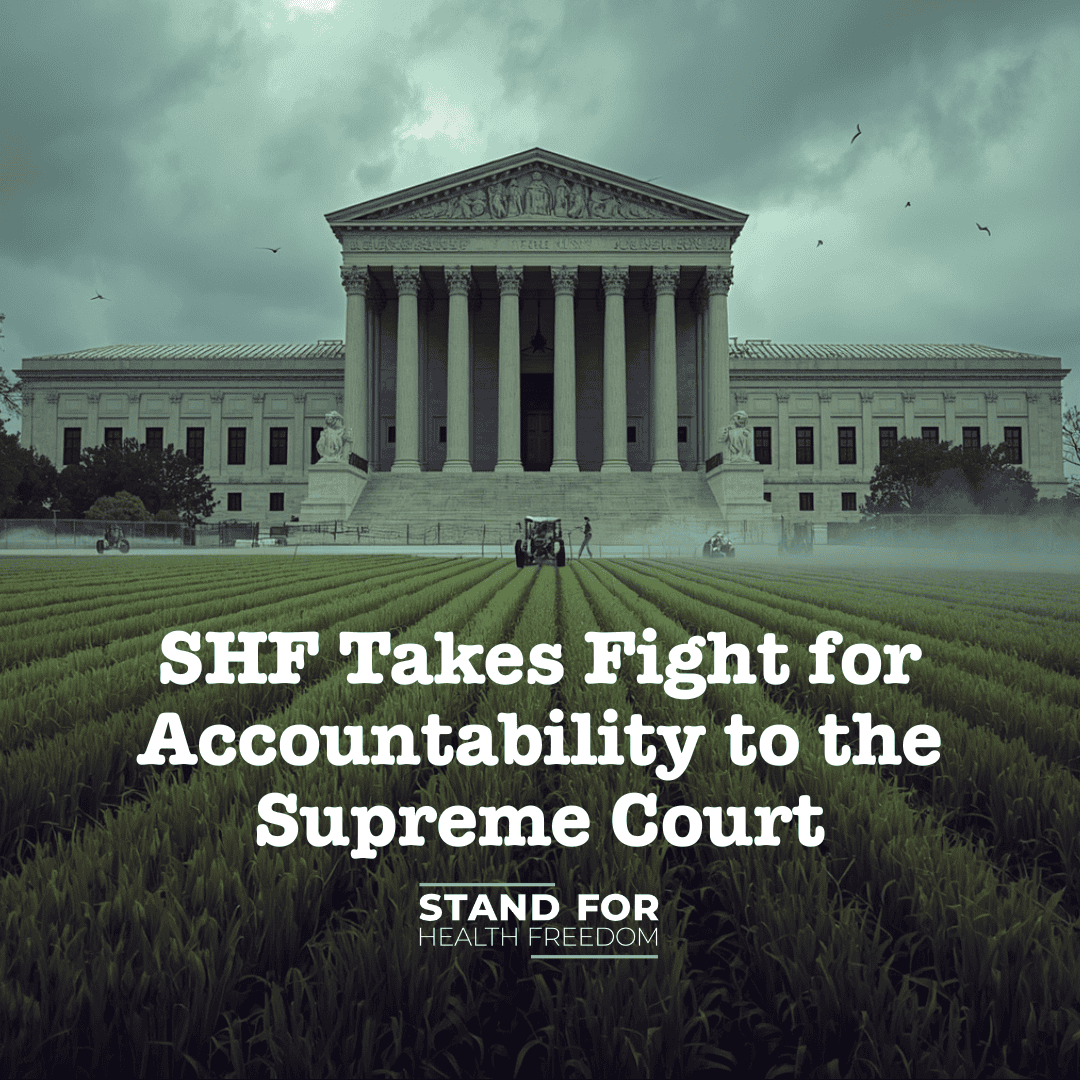
We at Stand for Health Freedom (SHF) have taken a critical step to protect Americans’ right to hold corporations accountable, filing a friend of the court brief in a pivotal case (Monsanto Company v. Durnell) now before the U.S. Supreme Court.

A “friend of the court” brief, also known as an amicus brief, allows organizations like SHF to provide the Court with additional perspective on what is at stake beyond the parties directly involved. While we are not one of the litigants in this case, our brief ensures the justices hear from the nearly one million Americans we represent (you) and understand the real-world impact their decision will have.
At stake is a question that could reshape the balance of power between corporations and the American people: can a company avoid responsibility for harm simply because a federal agency approved its product label?
Monsanto argues that it can. SHF is urging the Court to reject that claim.
What This Case Is Really About
The case centers on John Durnell, a Missouri man who developed cancer after years of using Roundup, one of the most widely used herbicides in the United States. He sued after learning that the product carried no warning about potential cancer risks, despite evidence presented in court that the manufacturer was aware of those concerns.
A Missouri jury awarded Durnell damages. Now, Monsanto is asking the Supreme Court to overturn cases like his entirely.
The company’s argument relies on a sweeping interpretation of federal law. It claims that because the Environmental Protection Agency (EPA) approved its label under the Federal Insecticide, Fungicide, and Rodenticide Act (FIFRA), no state-level failure-to-warn claims should be allowed.
If accepted, this argument would go far beyond this one case. It would block Americans across the country from bringing lawsuits when companies fail to disclose known health risks.
SHF’s Position: Approval Is Not Immunity
SHF’s brief makes a clear and constitutionally grounded argument: federal registration was never intended to shield companies from accountability.
FIFRA establishes baseline labeling requirements. It does not eliminate the longstanding role of state courts in holding companies responsible for harm caused by inadequate warnings. As the brief emphasizes, treating federal approval as a blanket defense would effectively create immunity where Congress never authorized it.
That distinction matters.
For decades, the civil justice system has served as a critical safeguard when regulatory systems fall short. Juries have repeatedly found that Monsanto failed to warn users about cancer risks, even as evidence mounted and settlements reached into the billions.
Removing that avenue for accountability would not just change legal doctrine. It would shift the cost of harm away from corporations and onto individuals, families, and communities.
A National Moment
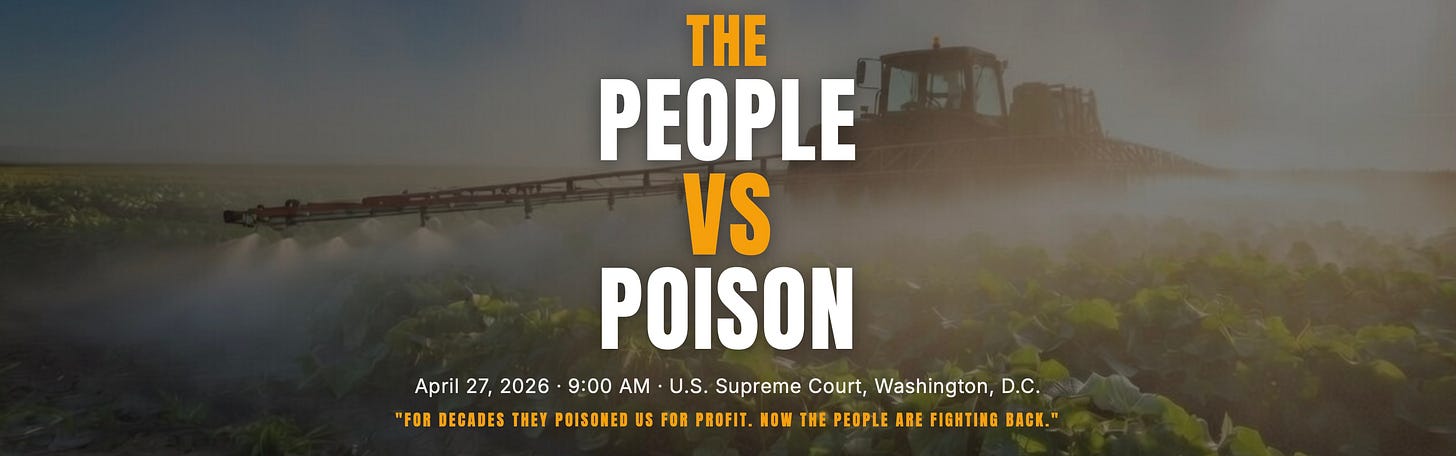
The Supreme Court has agreed to hear the case, with oral arguments scheduled for April 27, 2026. That same day, advocates from across the country will gather in Washington, D.C. for the People v. Poisonmarch.
This convergence is not coincidental.
At a moment when the Court is considering whether Americans retain the right to hold powerful industries accountable, citizens are showing up to demand transparency, safety, and justice. SHF will be on the ground, helping connect the legal stakes of this case to the everyday realities facing families across the country.
Why This Matters Beyond the Courtroom
This case is part of a broader trend. Across industries, companies are increasingly advancing legal arguments designed to limit liability by leaning on federal regulatory approval.
If successful here, that strategy could extend far beyond pesticides.
It could weaken the ability of states to protect their residents, limit the role of juries, and erode one of the most effective tools Americans have to challenge corporate misconduct.
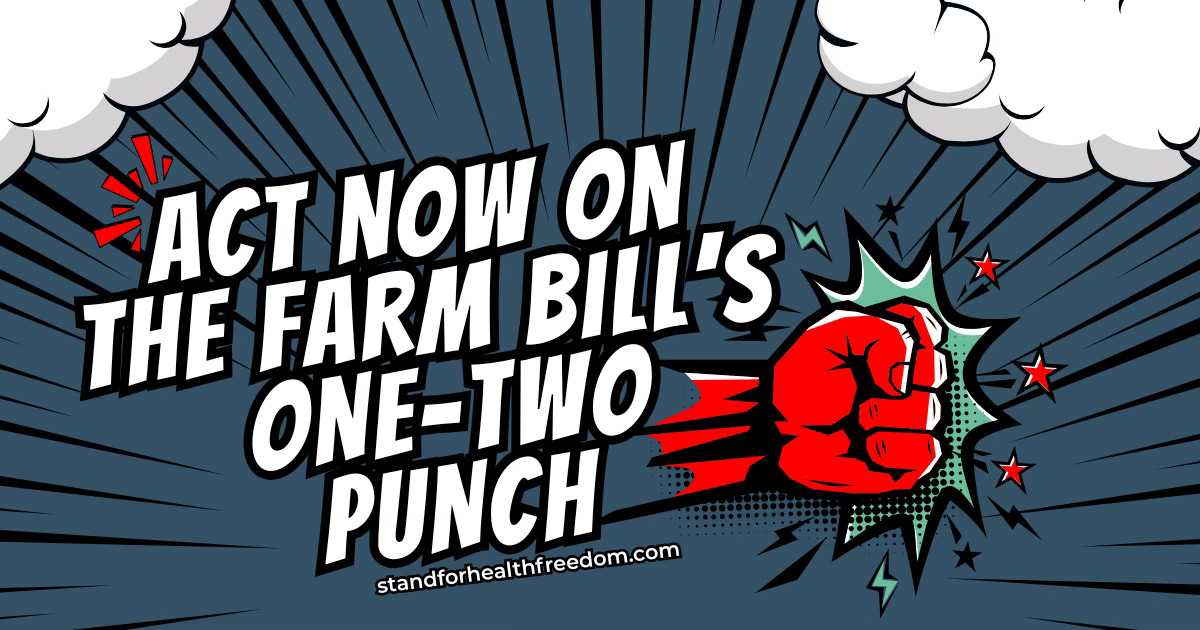
Take Action: The Farm Bill
While the Supreme Court considers this case, policymakers in Washington are shaping the future of agriculture through the Farm Bill.
This is a critical opportunity to reinforce transparency, strengthen protections, and ensure that public health is not subordinated to corporate interests.
Advocates can take action today by urging lawmakers to prioritize accountability and safeguard the rights of individuals and families.
The Bottom Line
The question before the Supreme Court is simple, but its implications are profound:
Will Americans retain the right to seek justice when companies fail to warn about known dangers, or will that right be quietly taken away?
SHF is standing to ensure the answer protects the people.
Now is the time to stand with us, join us in person on April 27th or take action now and tell your House Rep to vote no on specific farm bill provisions. Either way, make sure you are following us so you can stay apprised of all the work we are doing, together!